

In 2025, Texas investors have clear avenues to reduce tax liability by donating land to charity or allocating profits to qualified organizations. These deductions, combined with specific Texas land donation tax incentives, deliver measurable savings while directing resources into housing, infrastructure, and neighborhood development.
Tax Efficiency by the Numbers
According to the IRS, your philanthropic impact is matched by significant fiscal benefits:
- Appreciated Real Estate: Properties held for over one year are generally deductible at fair market value, up to 30% of your Adjusted Gross income (AGI).
- Carryforward Potential: Any excess deduction can be carried forward for up to five years (IRS Publication 526).
- Cash Contributions: Profit-based donations are deductible up to 60% of AGI.
Why It Matters Now
Charitable giving in the U.S. reached a record $592.5 billion in 2024, reinforcing the sustained momentum behind philanthropic investment. For both new and accredited investors, these strategies move capital beyond the S&P 500 to stabilize and scale through tangible assets that transform Texas communities.
Elysium Real Estate Investments LLC helps investors apply these opportunities with precision, ensuring compliance and measurable results. This article provides a step-by-step framework to maximize your community impact and financial returns in tandem.
How These Incentives Work in Texas

Texas investors can now use structured programs that reward both asset and profit donations. These align with IRS charitable contribution rules and offer Texas tax incentives for neighborhood development, building upon the foundational tax Benefits in Texas Real Estate that every serious investor should leverage.
Phase 1 Strategy: Preparing for 2026 Tax Policy Shifts
As we approach 2026, investors must prepare for significant shifts in federal tax policy introduced by the Omnibus Bipartisan Budget Act of 2025 (P.L. 119-21).
The 0.5% AGI Floor: Starting in 2026, a new “floor” for charitable deductions will be implemented. Itemizers will only be able to deduct the portion of their total charitable gifts that exceeds 0.5% of their Adjusted Gross Income (AGI).
“Bunching” Strategy: To clear this floor, many investors are adopting a “bunching” strategy—concentrating several years’ worth of planned donations into a single high-income tax year to clear the floor and maximize their deduction. This ensures that the total contribution significantly exceeds the 0.5% threshold, maximizing the deductible amount.
35% Deduction Cap: For those in the highest (37%) tax bracket, the value of itemized deductions will be effectively capped at 35%. This means that for every dollar donated, the maximum tax relief is 35 cents, requiring careful planning for large-scale land transfers.
Donations of Land: Deductions Based on Fair Market Value

When donating land to charity, the IRS allows a land donation tax deduction based on the fair market value if the property has been held for more than one year. In Texas, where values in cities like Austin and Houston have surged, this often creates a significant offset against taxable income. The tax benefits of donating land extend beyond immediate deductions, helping investors reduce overall tax liability while supporting important local projects.
Example: An investor who purchased a parcel for $120,000 in 2018 and donates it in 2025 at an appraised value of $200,000 may deduct the full $200,000, subject to IRS limits. Combined with Texas land donation tax incentives, this approach generates substantial relief while eliminating future property tax obligations.
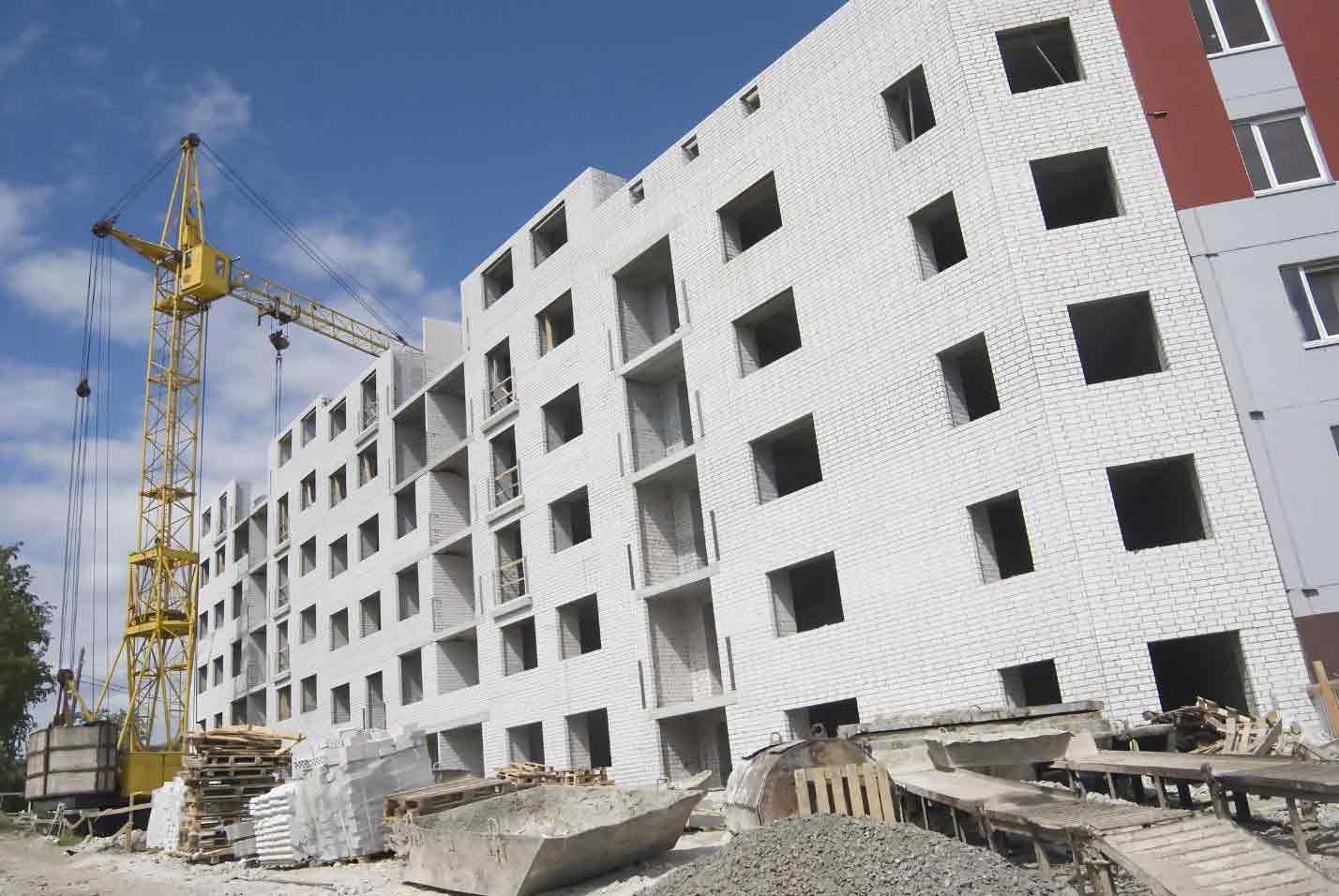
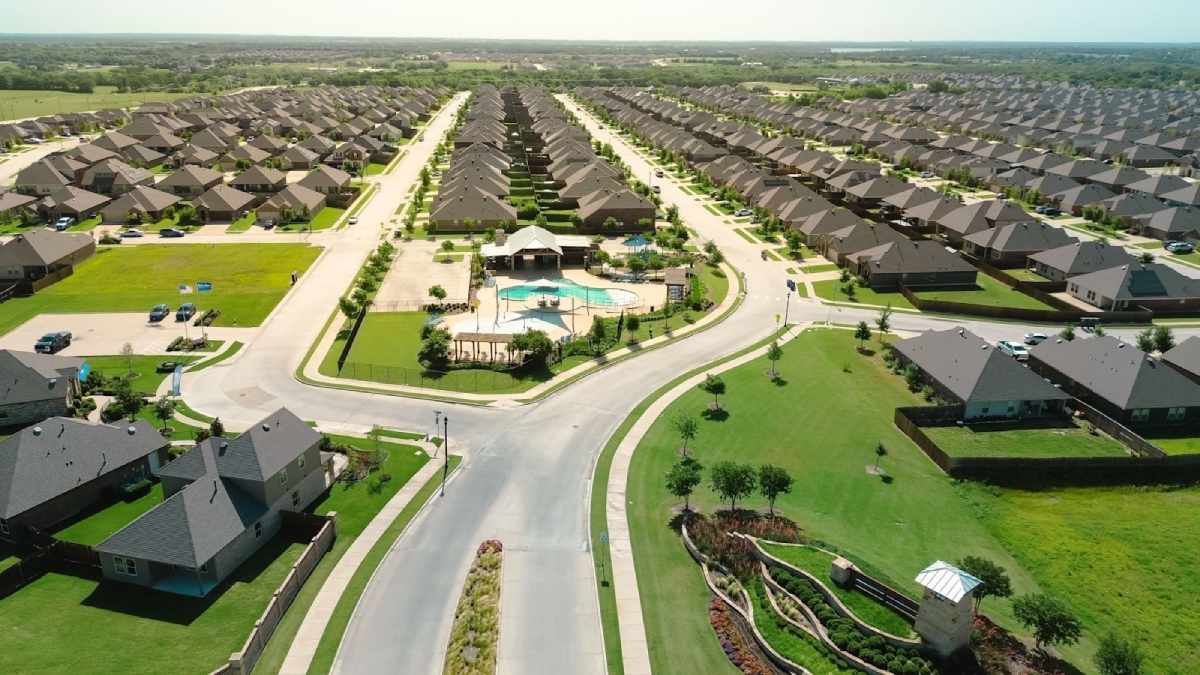
Donating land to charity in Texas can extend beyond individual investors. Parcels transferred to housing nonprofits, conservation trusts, or local development authorities can be redeployed into affordable housing, public-use facilities, or community green spaces, potentially creating measurable neighborhood impact.
While Texas offers these unique local benefits, maintaining federal compliance is essential. We recommend reviewing the fundamental IRS documentation and appraisal requirements every real estate professional must follow to secure these deductions.
Donations of Profits: Offsetting Gains with Charitable Giving
Texas profit donation tax savings give investors a way to align charitable giving with liquidity events. Instead of holding or transferring physical land, you sell the property, realize gains, and then donate a portion of those profits to qualified organizations.

- Reducing income: The donated portion is deducted from taxable income, directly lowering liability.
- Capital gains management: Depending on the donation structure, you can reduce or eliminate capital gains tax exposure on the portion of the donation.
- Liquidity preservation: Unlike land donations, you retain capital that can be reinvested elsewhere.
Local Programs and Incentives: Municipal Advantages
In addition to federal deductions, Texas cities and counties are building their own land donation tax incentives to encourage private investment in public priorities, a trend largely driven by the explosive growth across The Texas Triangle.
- Dallas: Developers contributing land for affordable housing projects can qualify for density bonuses that allow more units on adjacent sites, along with expedited permitting that accelerates project delivery.
- Austin (S.M.A.R.T. Housing): In Austin, developers can leverage the S.M.A.R.T. (Safe, Mixed-Income, Accessible, Reasonably Priced, Transit-Oriented) Housing program when donating land or developing affordable units.
- Incentives for Developers: Those who meet the program’s rigorous criteria can qualify for substantial fee waivers and expedited review cycles. These incentives significantly reduce the “soft costs” of development and accelerate the time-to-market for community-impact projects.
- Chapter 312 Abatements: Investors should also be aware of Texas Tax Code Chapter 312, which provides a powerful framework for municipal tax relief.
- Value Increase Exemptions: This code allows cities—San Antonio being a prominent example—to exempt the increased value of a property from taxation for up to 10 years. This abatement is often granted when developers provide clear public benefits, such as significant land donations for revitalization corridors or infrastructure.
- Houston: Matching funds are available when donated parcels support conservation, drainage improvements, or transit-oriented development. Investors who donate land in flood-prone zones or along bayou expansion corridors can often negotiate for “Impact Fee Credits.” Additionally, Houston’s participation in the “380 Agreement” framework allows for the reimbursement of public infrastructure costs—such as sidewalks and street lighting—when a project includes a significant land-based charitable component.
- Corpus Christi and Fort Worth: Both cities are piloting initiatives where donating land to charity Texas benefits include faster entitlement processes, fee credits, and infrastructure partnerships that expand community impact. In Fort Worth, the “Neighborhood Empowerment Zones” (NEZ) program provides a powerful layer of local relief. Corpus Christi has begun incentivizing land donations in its “redevelopment corridors” by offering “Platting Priority.” This allows investors to move to the front of the municipal review queue, potentially shaving three to six months off the entitlement timeline for complex subdivisions or multi-family rezonings.
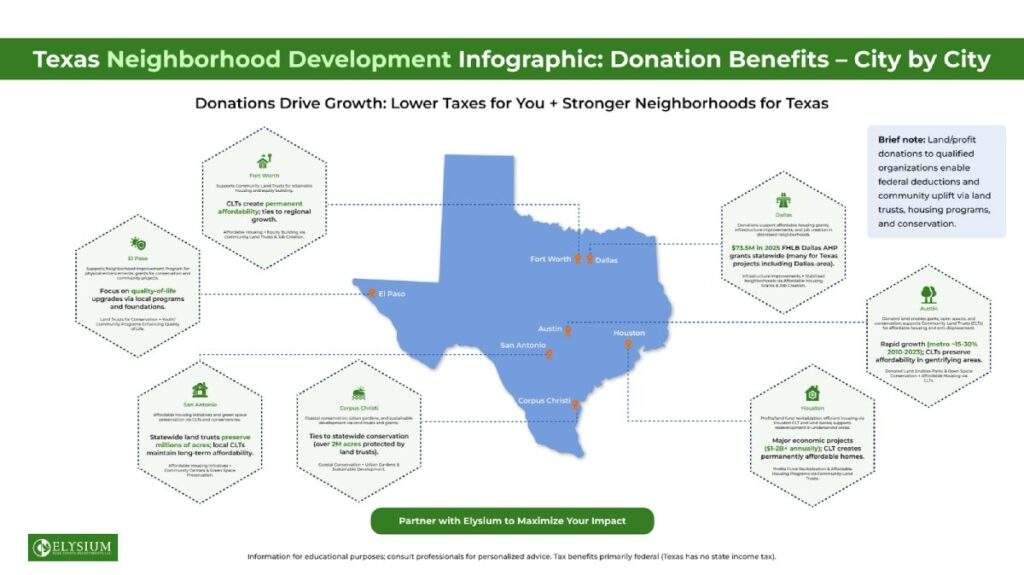
For investors, these programs mean much more than incremental tax savings. They improve deal velocity, reduce permitting risk, and strengthen relationships with city officials. Combined with the tax benefits of donating land, municipal incentives become especially powerful in Texas, where over 93% of land is privately owned, and conservation easements have already protected nearly one million acres of that land.
Catalytic Investments and Social Equity
Donations to redevelopment corridors often serve as “Catalytic Investments.” By gifting land for community assets like parks, investors signal market confidence to institutional lenders. This visible commitment to “Social Equity“ can stabilize neighborhood property values and significantly reduce the perceived risk of high-need areas.
Beyond immediate tax relief, this strategy creates a powerful “halo effect” for the donor’s brand. In the competitive Texas market, being a partner in community growth can lead to preferential treatment during municipal entitlement negotiations. By aligning philanthropic giving with long-term portfolio goals, investors build a legacy while protecting the financial viability of their regional holdings.
Compliance: IRS Substantiation Rules and Form 8283
Securing these benefits requires absolute precision in reporting. For any non-cash real estate gift exceeding $5,000, filing IRS Form 8283 is mandatory. Crucially, the IRS requires a ‘Qualified Appraisal’ performed by a certified real estate appraiser who meets specific education and experience standards. This appraisal must meet specific IRS standards and be conducted within a strictly defined window (no earlier than 60 days before the donation) to substantiate the Fair Market Value (FMV) claimed on the tax return.
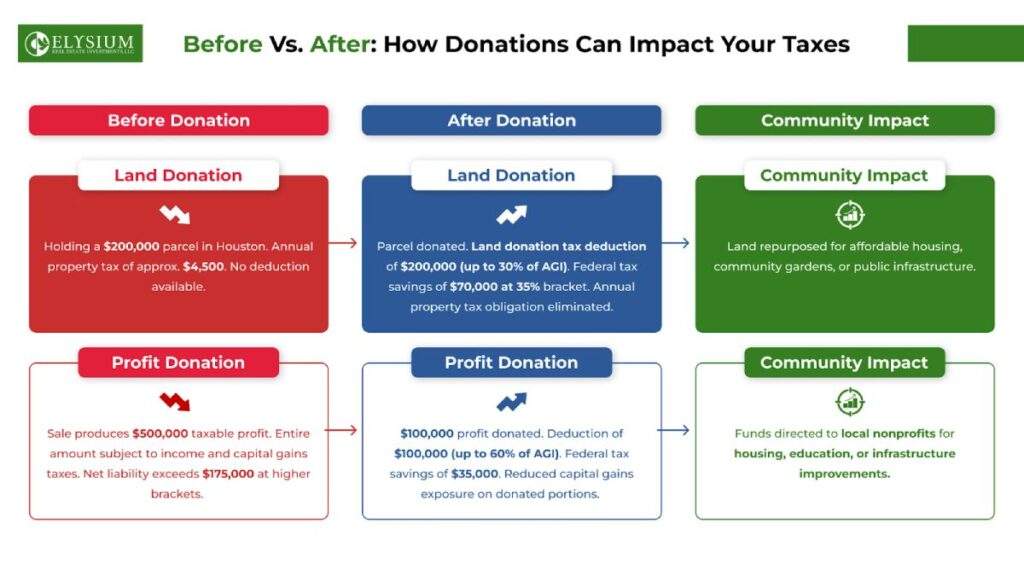
Before vs. After: How Donations Can Impact Your Taxes
Donating land or profits reduces liability and directs resources into Texas neighborhoods. The table below shows how outcomes shift once contributions are made.
| Scenario | Before Donation | After Donation | Community Impact |
|---|---|---|---|
| Land Donation | Holding a $200,000 parcel in Houston. Annual property tax of approx. $4,500. No deduction available. | Parcel donated. Land donation tax deduction of $200,000 (up to 30% of AGI). Federal tax savings of $70,000 at 35% bracket. Annual property tax obligation eliminated. | Land repurposed for affordable housing, community gardens, or public infrastructure. |
| Profit Donation | Sale produces $500,000 taxable profit. Entire amount subject to income and capital gains taxes. Net liability exceeds $175,000 at higher brackets. | $100,000 profit donated. Deduction of $100,000 (up to 60% of AGI). Federal tax savings of $35,000. Reduced capital gains exposure on donated portions. | Funds directed to local nonprofits for housing, education, or infrastructure improvements. |
Both strategies may generate measurable tax relief and unlock Texas tax incentives for neighborhood development. They also ensure investor contributions result in visible improvements across Texas communities.
Ways to Take Advantage of These Opportunities

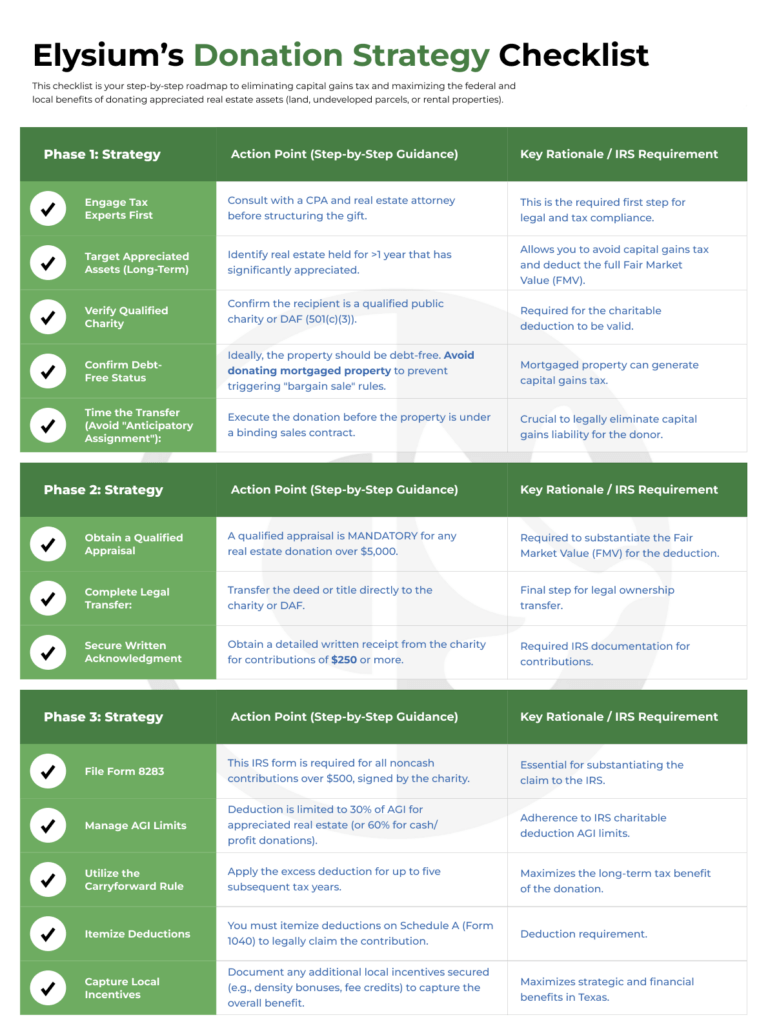
Important: If you expect a sale, execute the donation before any binding contract is signed. This timing step is often what determines whether capital gains are truly eliminated.
Stop leaving tax savings unclaimed.
Texas Market Impact: Community Land Trusts (CLTs)

Land and profit donations are reshaping Texas markets through models like Community Land Trusts (CLTs) as defined in Texas Local Government Code Chapter 373B.
Dual-Ownership Model: CLTs operate on a unique model where the nonprofit trust retains ownership of the land, while the residential or commercial improvements (the structures) are owned by the residents or tenants.
99-Year Ground Lease: This model is typically secured by a 99-year ground lease. In cities like Dallas and Houston, this mechanism is used to stabilize neighborhood property values and ensure that the land remains dedicated to community-focused or affordable use for nearly a century.
By separating the land value from the building cost, CLTs ensure that housing remains affordable for future generations, even as surrounding market rates climb.
- Supporting Urban Growth
- In Austin and Houston, demand growth and rising prices have put affordability under strain.
- Directing land into affordable housing projects eases market pressure while delivering donating land to charity Texas benefits for investors.
- Donors capture deductions and help stabilize housing supply in markets where entry costs continue to rise.
- Revitalizing Weaker Markets
- In Corpus Christi and parts of San Antonio, donations targeted to redevelopment corridors reduce blight and attract new businesses.
- Contributions often trigger additional municipal support, layering local land donation tax incentives on top of federal benefits.
- Over time, these investments lift property values and create healthier rental markets.
- Strengthening Investor Positioning
- Accredited investors who integrate Texas land donation tax incentives into their strategies demonstrate community alignment.
- Municipal officials, lenders, and partners may be more inclined to support projects with a visible neighborhood impact. This reputational advantage can sometimes help with approvals, broaden financing options, or facilitate future deals. Utilizing asset protection and trusts for real estate remains a critical step for preserving the long-term integrity of these community-focused land transfers.

Conclusion
Texas investors may be able to improve financial efficiency while contributing to community impact. By donating land to charity, engaging in profit-based giving, and participating in related programs, you can capture the tax benefits of donating land, secure Texas profit donation tax savings, and leverage Texas tax incentives for neighborhood development.
The potential outcome:
- Your liability may be reduced through deductions, including the land donation tax deduction.
- Texas communities thrive by gaining immediate resources for housing, schools, and essential infrastructure.
Elysium Real Estate Investments LLC provides the expertise to structure these donations correctly, align them with IRS and Texas requirements, and ensure every contribution delivers maximum tax efficiency and neighborhood benefit.
Strategic Tax Planning for 2025 and Beyond Navigating the complexities of the Omnibus Bipartisan Budget Act of 2025 and optimizing land donation structures requires specialized oversight. Whether you are looking to offset capital gains or maximize your community impact through the Texas Triangle, our team is ready to help you architect a tax-efficient legacy.
Legal Disclaimer: The information in “Give & Gain: Leveraging Texas Tax Incentives for Real Estate” is for educational purposes only and not financial, legal, or tax advice. Elysium Real Estate Investments LLC offerings are made under Regulation D (Rules 506b and 506c) to accredited investors, and Section 504 (limited to $10M annually; does not preempt state ‘blue sky’ laws). Real estate and charitable giving involve risks, including tax law changes and market volatility. Elysium does not guarantee specific outcomes. Investors must conduct independent due diligence and consult professionals. Elysium and its affiliates accept no responsibility for losses or liabilities arising from this content. Past performance does not guarantee future results.